Timberborn
A city-builder where beavers build cities on stilts, manage water as their central resource, and survive cyclical droughts.
View photos ↓- Genre
- City-builder / Survival
- Developer / Publisher
- Mechanistry
- Year
- 2021 (early access)
- Status
- In progress
- Playtime
- 136h
- Rating
- 8/10
- Steam achievements
- 26/59
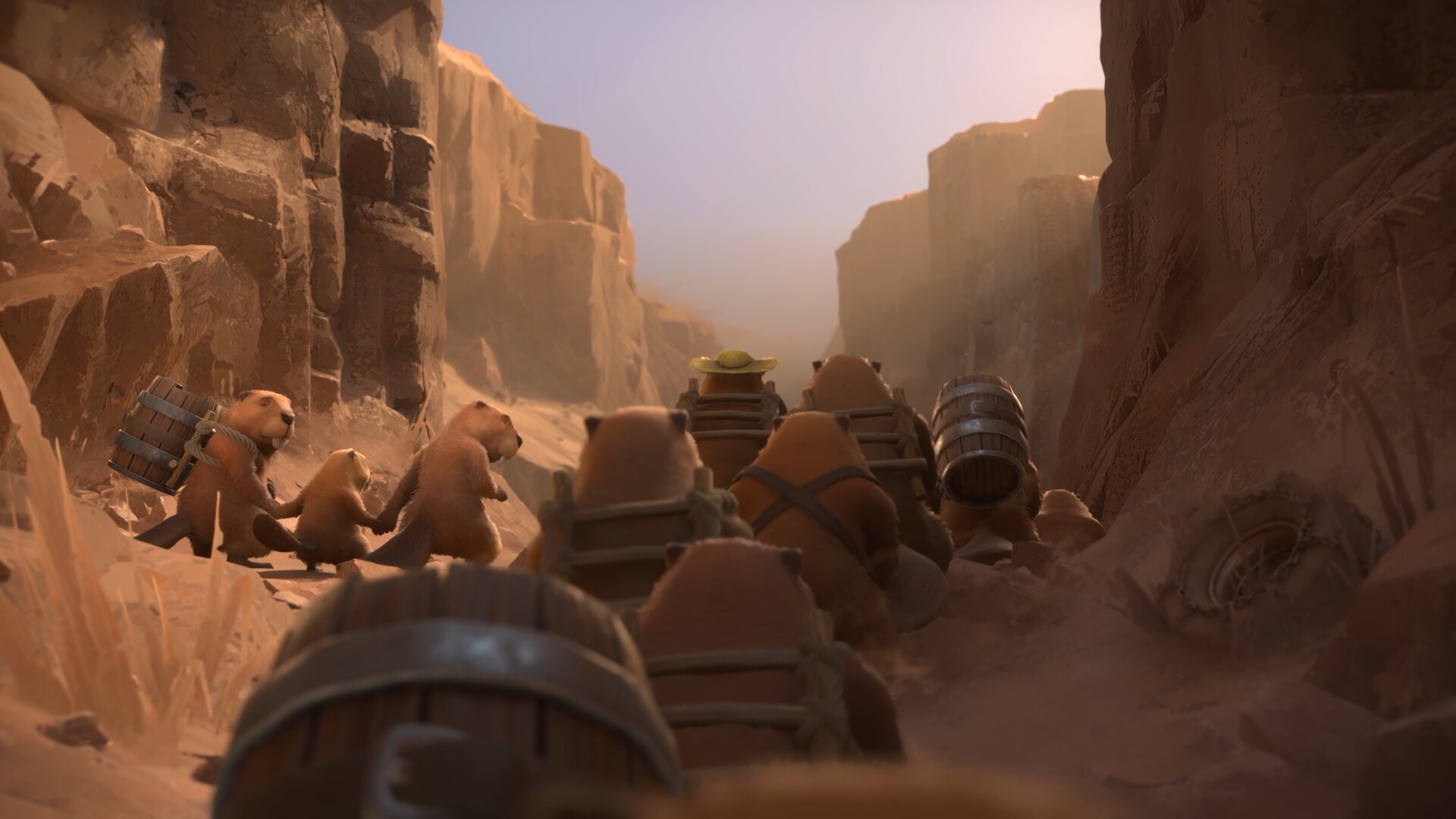
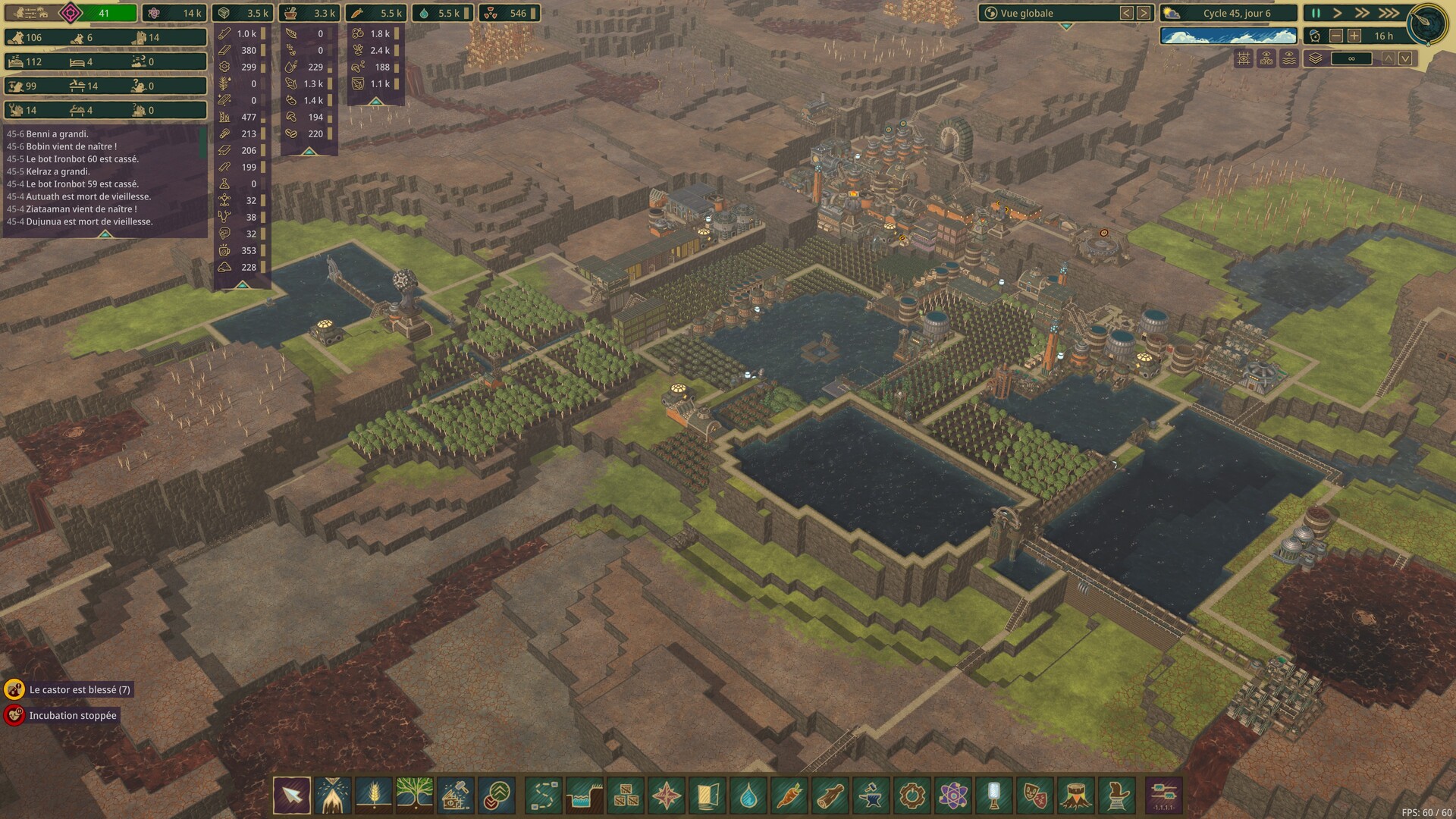
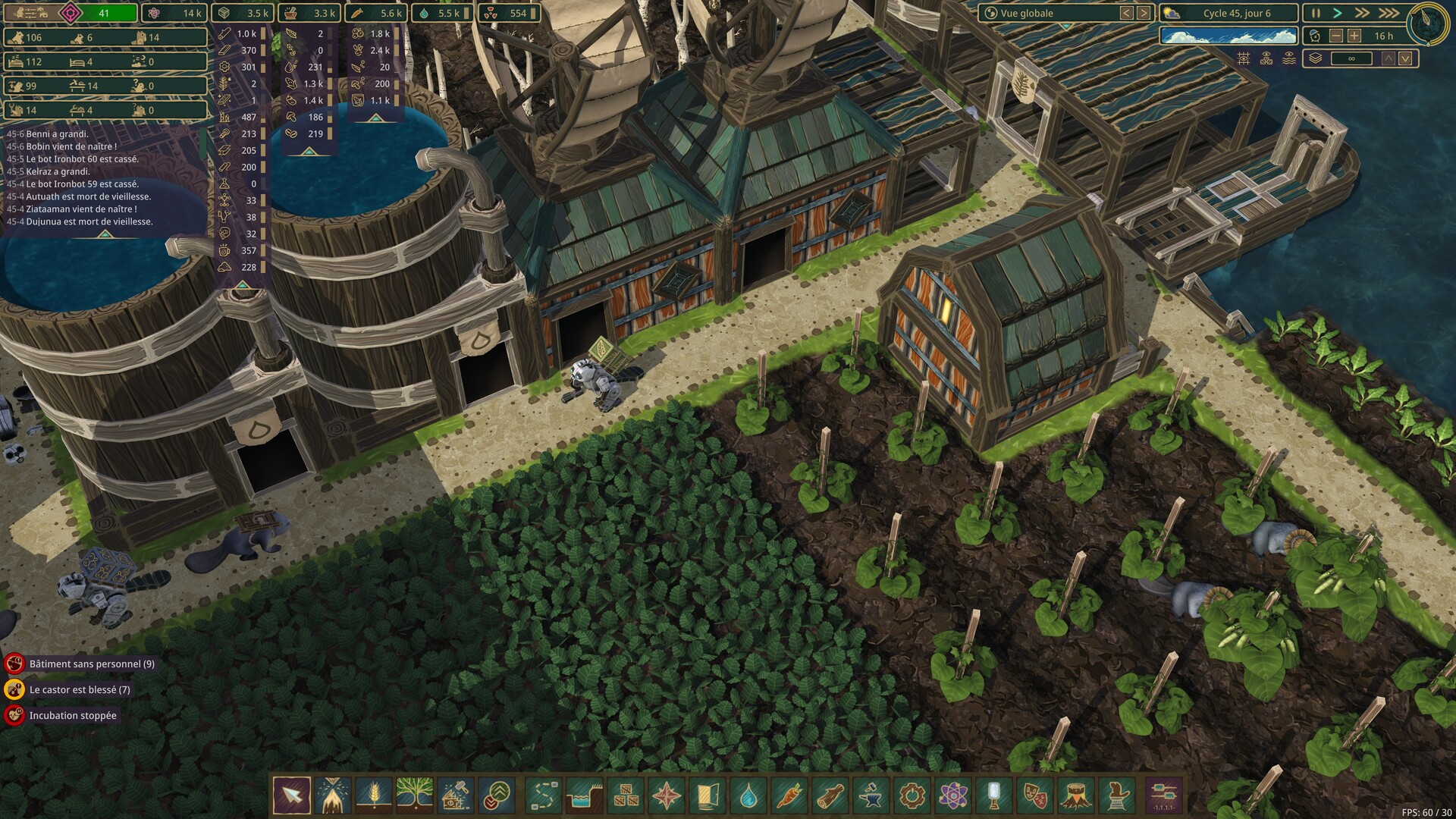
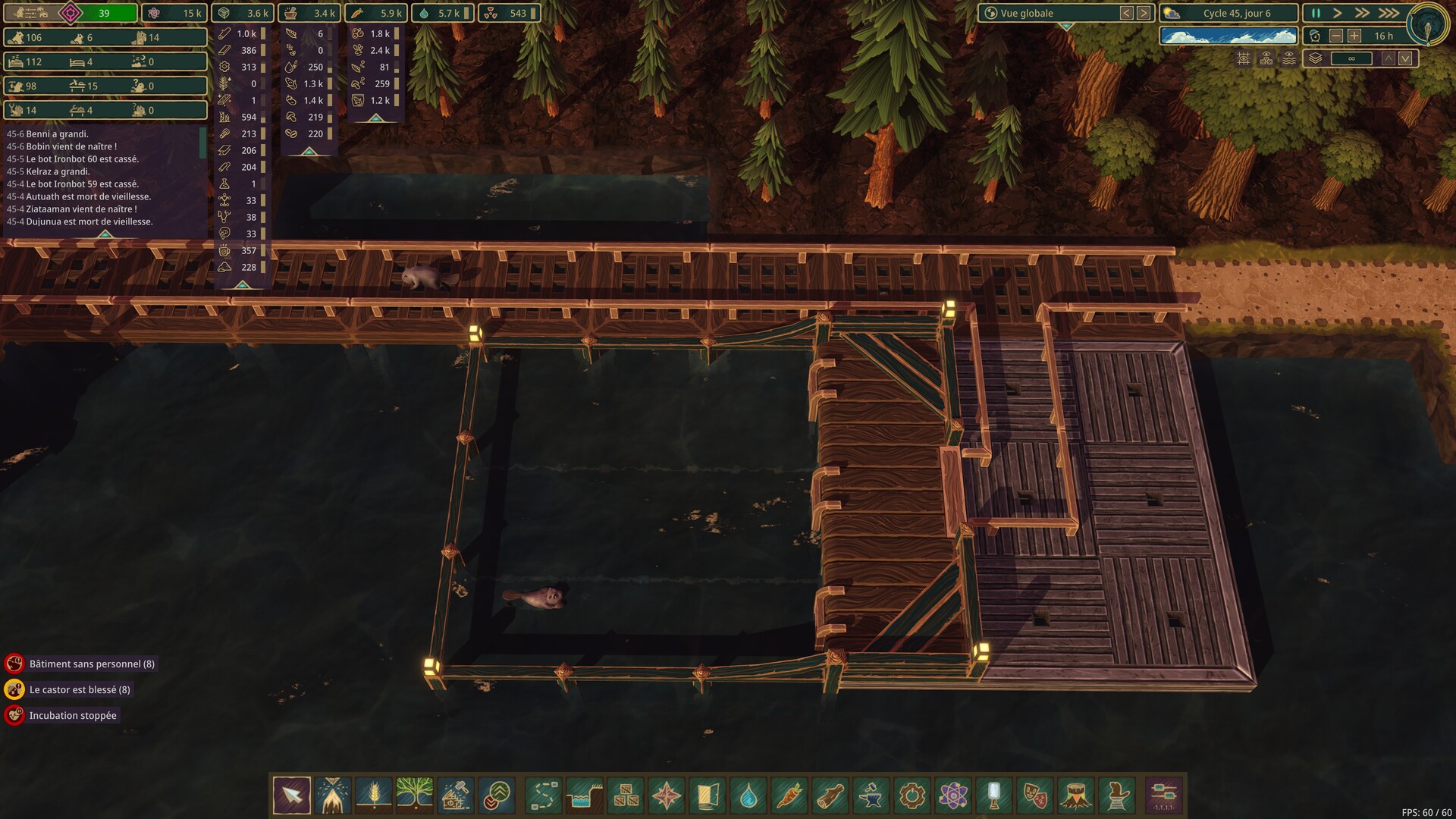
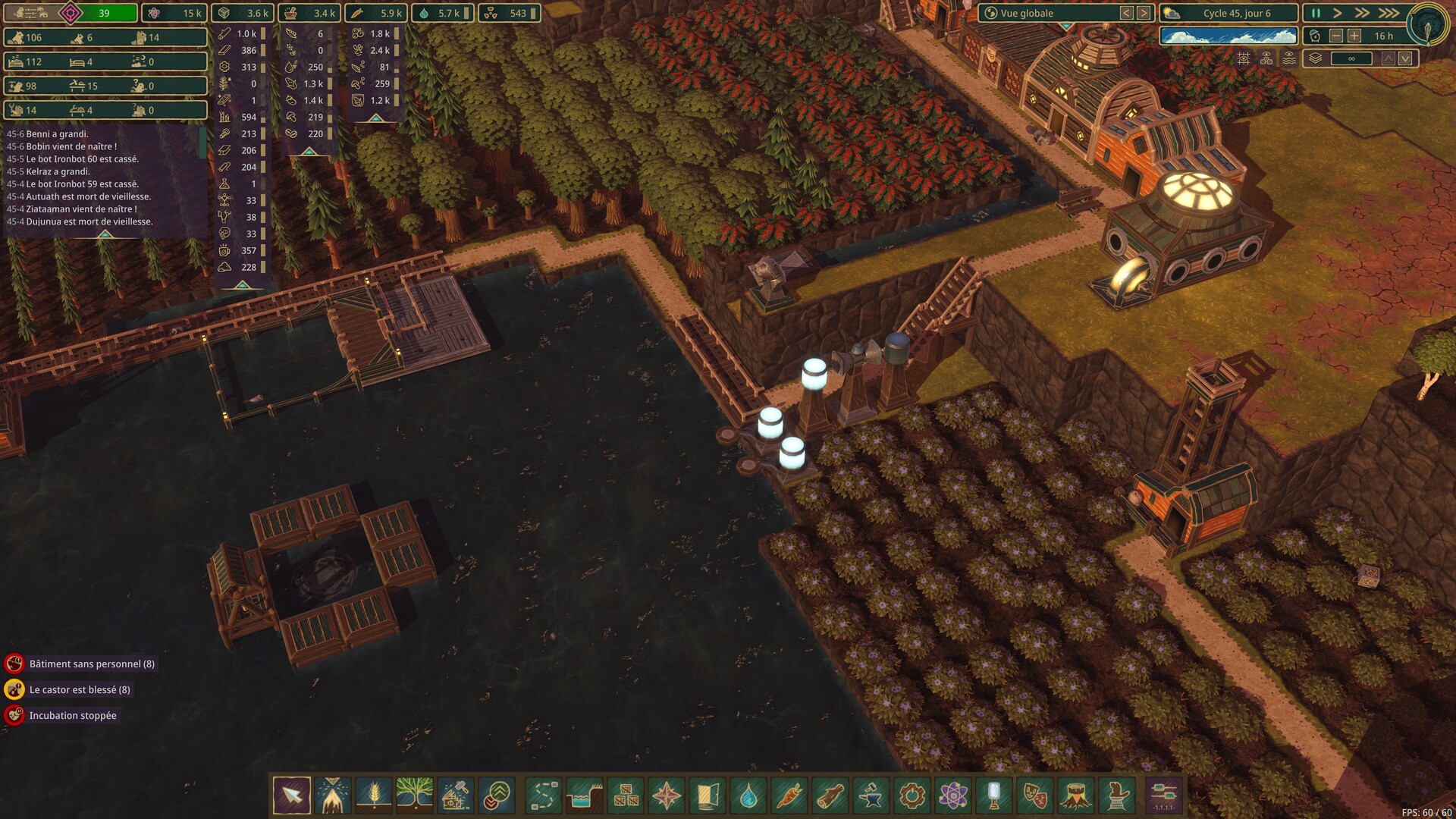
Timberborn starts from a premise that hooked me right away: after humans disappeared, beavers inherited the planet, and they build their cities up high, on wooden structures perched above the valleys. It’s a classic city-builder in form — housing, production, supply chains — but completely different at its core, because the entire game economy revolves around a single resource: water.
Water as the city’s backbone
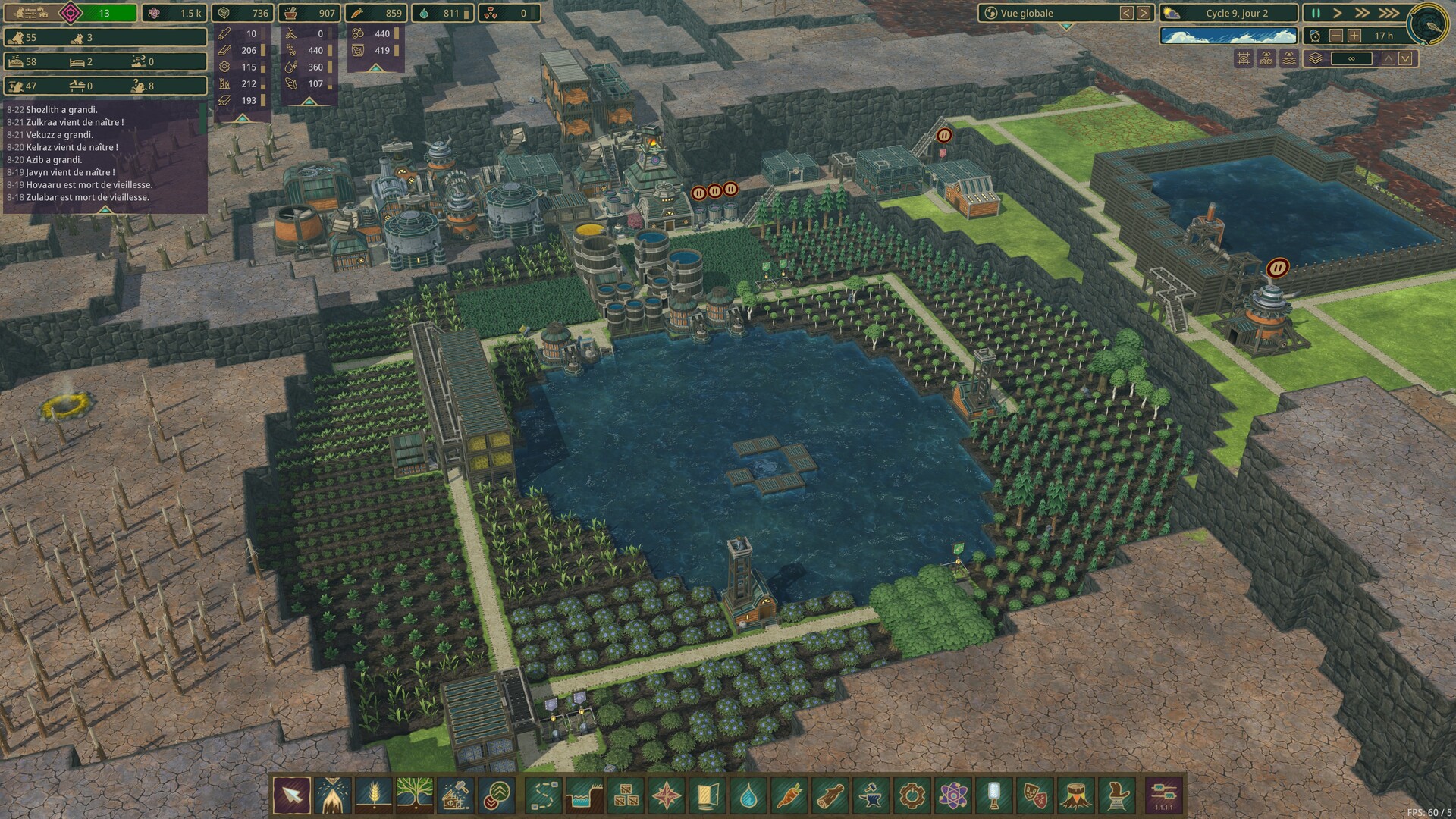
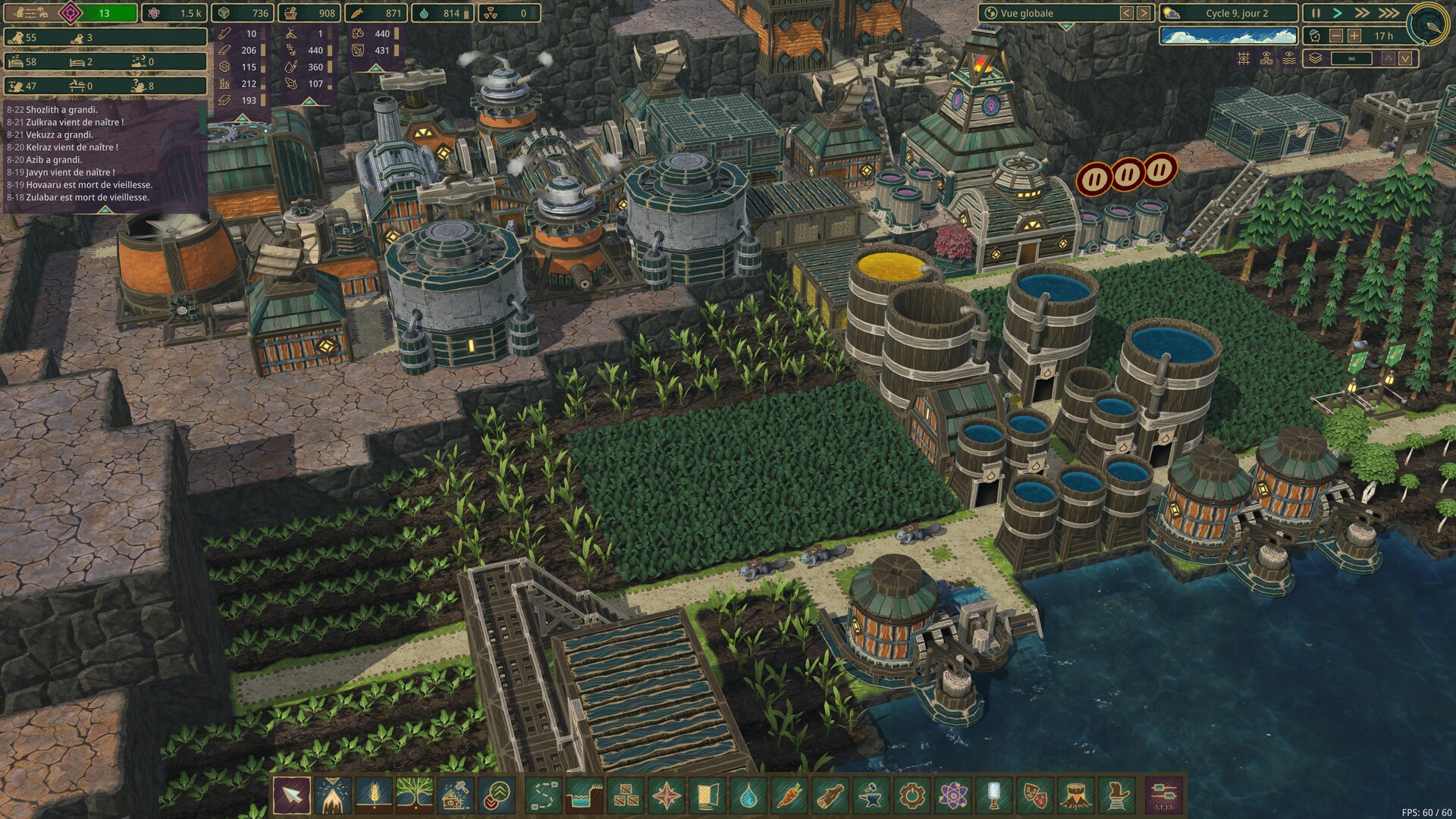
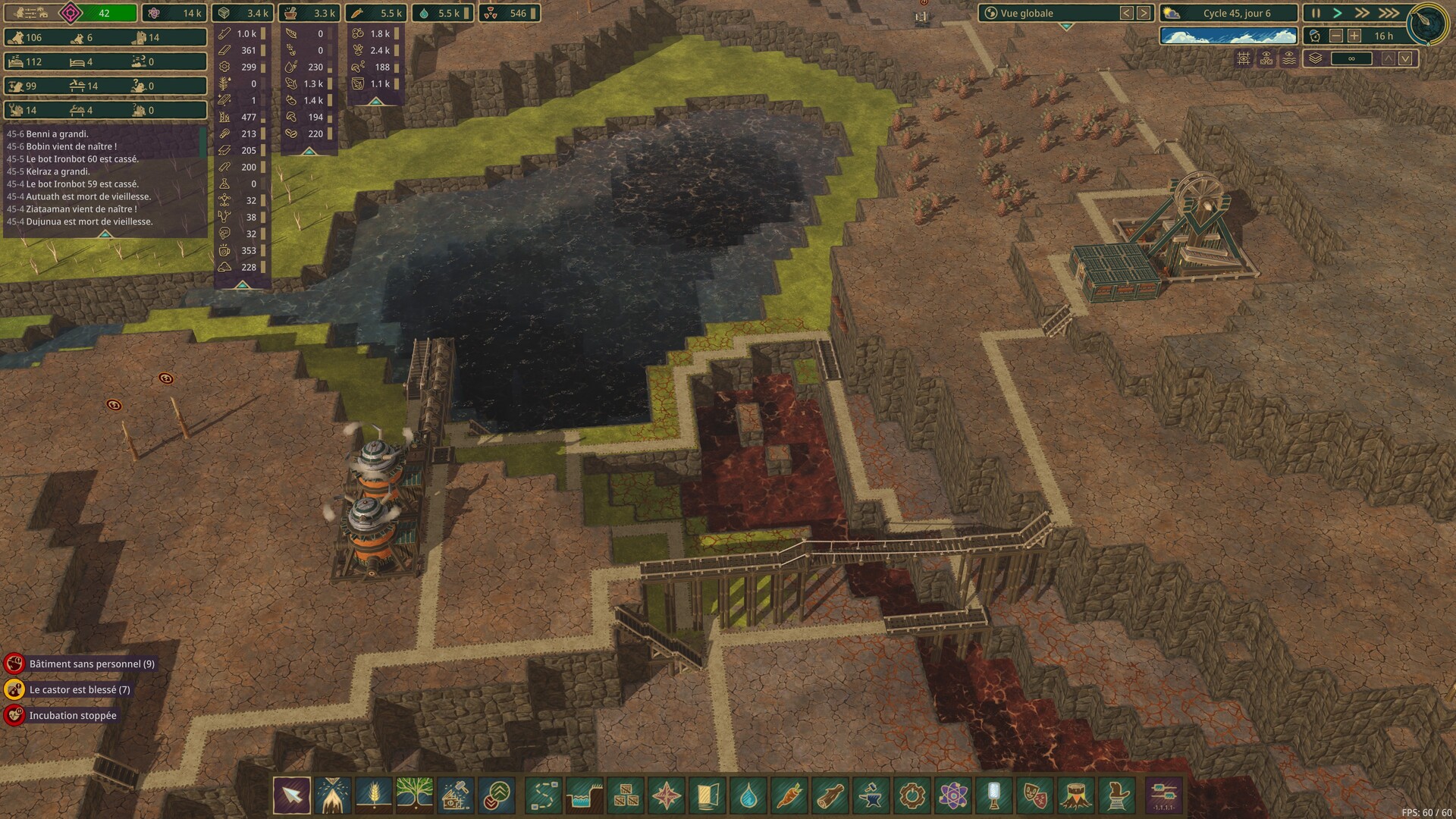
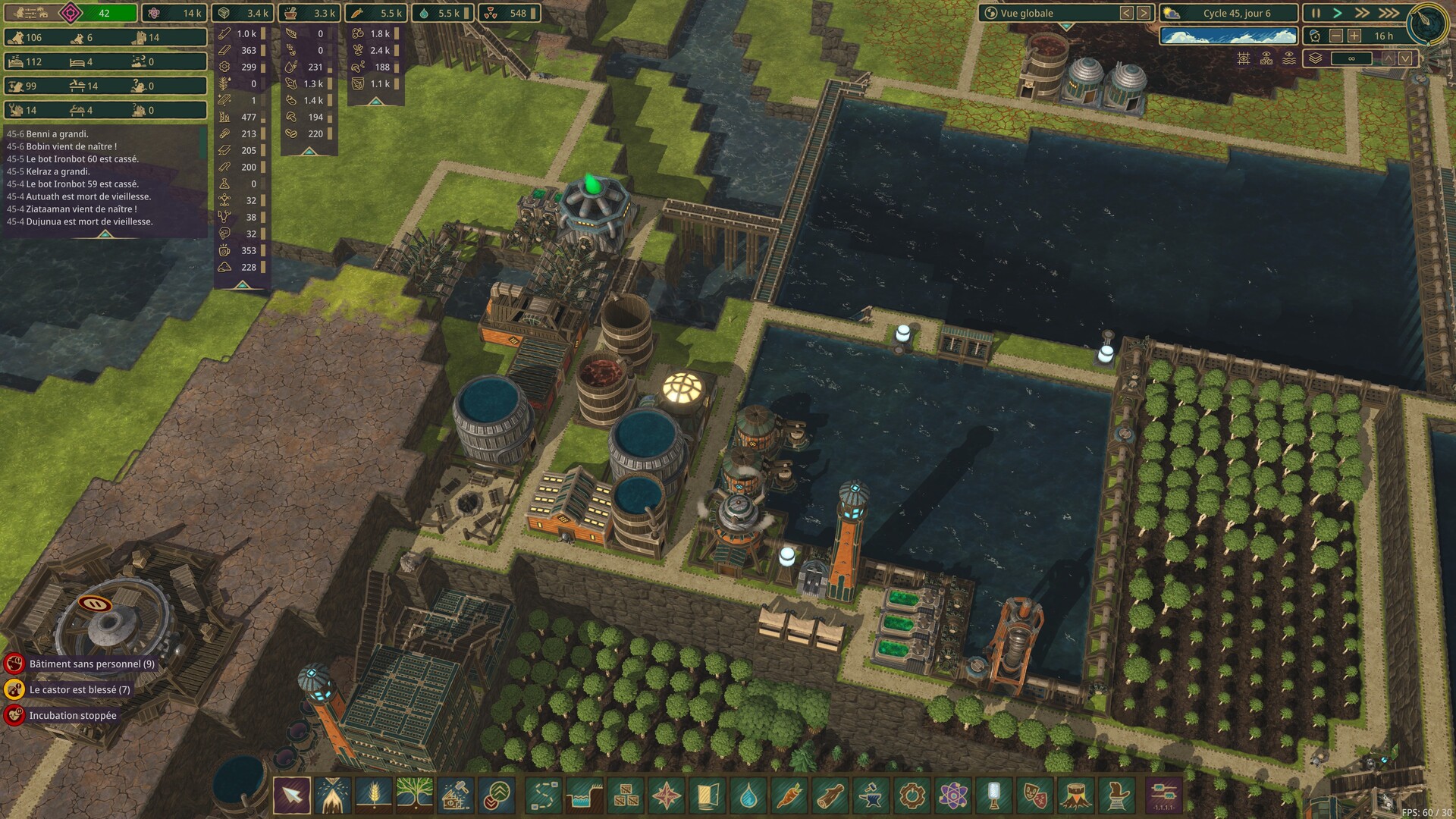
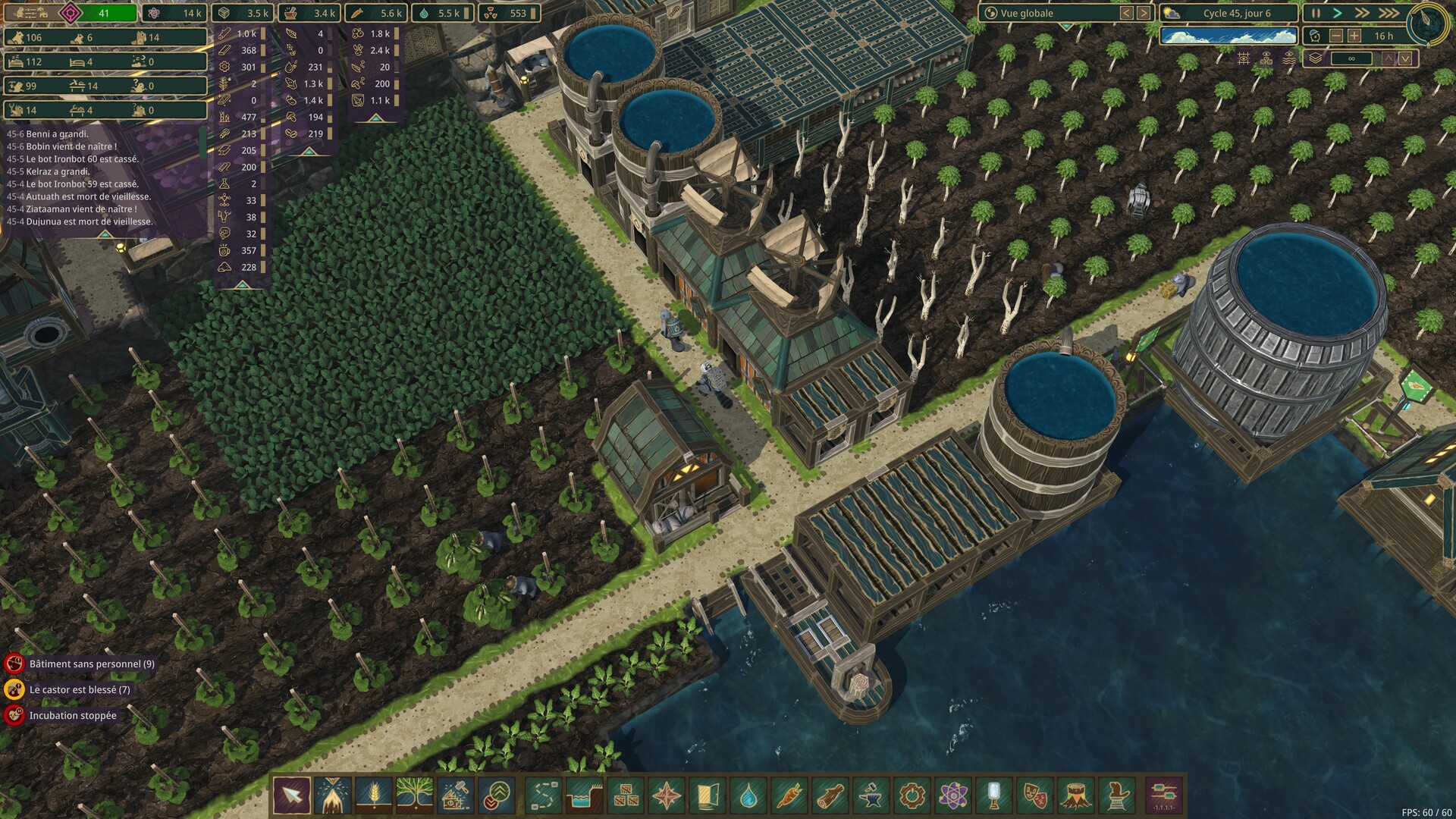
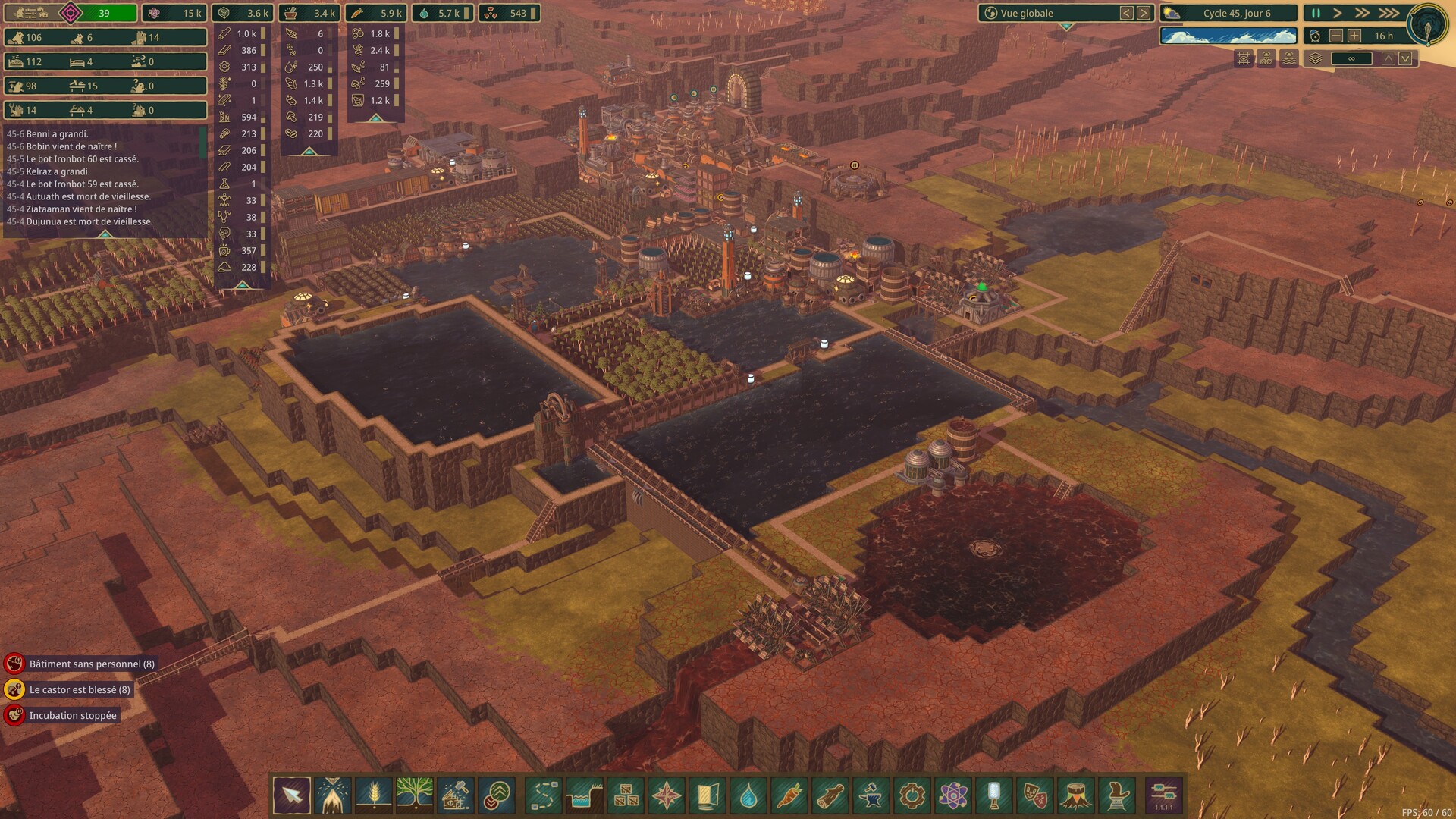
Unlike most city-builders where water is just one prerequisite among others, here it’s central: beavers know how to hold it back with dams, channel it, raise it with pumps, use it to irrigate crops. The game alternates between wet seasons and sometimes very long droughts, and the whole city has to be designed to survive those periods without running water — retention basins, reservoirs, careful management of irrigation priorities.
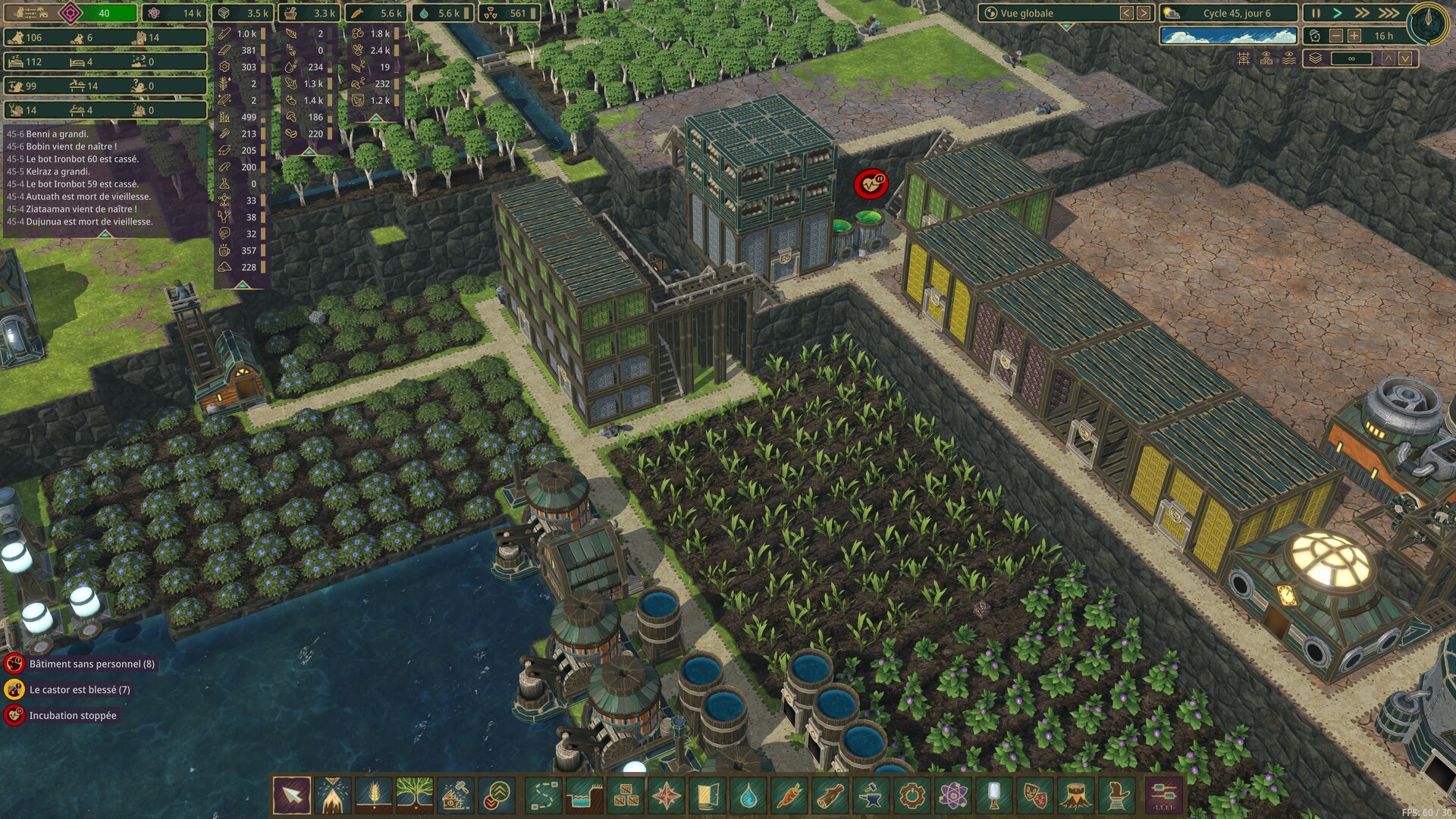
This hydraulic constraint turns building placement into a genuine civil-engineering puzzle: you have to think about the terrain in three dimensions, use the elevation to create waterfalls that power mills, and build levees to protect some districts from a controlled flood elsewhere.
Two factions, two ways to play
The game offers two factions with very different playstyles: the IronTeeth, more traditional and efficient at managing stored water, and the FolkTails, more experimental, able to breed genetically modified plants to adapt to drought. Replaying with the other faction feels almost like discovering a different game, since the optimal strategies change so much.
Still in early access as I write this, Timberborn keeps growing with every update. I haven’t hit the limits of what the game offers yet, and that’s exactly what keeps making me want to come back.